President Donald Trump’s hefty tariffs against China are now in place, and the levies could make an already stricken global stock market tumble further.
The administration’s threatened 104% total tariffs on China took effect overnight. The tariffs — originally 34% on top of a standing 20% tariff on China — jumped by an additional 50% early Wednesday morning, per Trump’s previous promises.
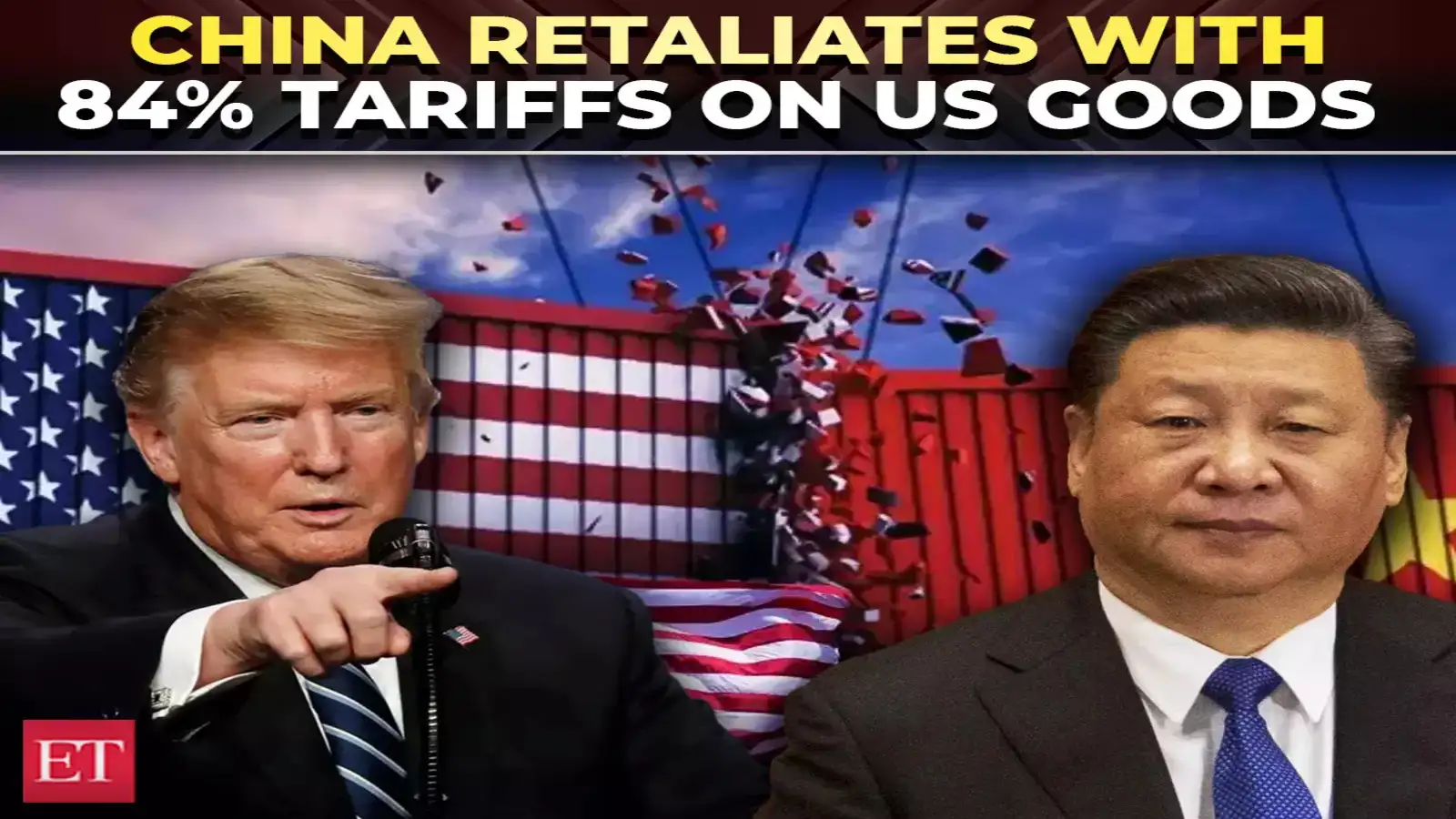
In response, China on Wednesday raised its retaliatory tariffs on the United States from 34% to 84%, mirroring Trump’s 50% increase. The East Asian country’s levies will go into effect Thursday.
Hours later, European Union member states voted to approve retaliatory tariffs on $23 billion in goods in response to Trump’s 25% tariffs on imported steel and aluminum. The tariffs will begin in stages, with the first round on April 15 and others on May 15 and Dec. 1, 2025.
Trump told party members at Tuesday’s National Republican Congressional Committee dinner that he doesn’t understand why people are so worried and claimed the tariffs are already bringing in money.
“They want to make a deal with us. We don’t necessarily want to make a deal with them,” Trump said. “We’re happy the way we are.”
He also said that nearly 70 countries have reached out to negotiate tariffs with the U.S.
China has continually vowed to fight against the tariffs, with the country’s foreign ministry calling on the U.S. to stop its “arrogant” and “bullying” behavior.
World shares drop, US futures bleak under China tariffs
But Trump’s confidence has not been reflected on trading floors at home or abroad.
Asian and European shares slid Wednesday, with Japan’s Nikkei 225 closing nearly 4% lower after the launch of the latest set of U.S. tariffs.
Chinese markets advanced after regulators appeared to intervene, urging state-owned companies to buy shares.
Germany’s DAX lost 2.1% to 19,857.36. In Paris, the CAC 40 declined 2.1% to 6,949.92. Britain’s FTSE 100 gave up 2% to 7,753.42.
The Dow and S&P 500 were lower when markets opened Wednesday, but the Nasdaq was fractionally higher.
The U.S. is rapidly approaching bear market territory, which happens when a stock index falls 20% from a high point and stays down.
As of Tuesday’s close, the S&P 500 was down nearly 19% from its February high. Wednesday’s tariffs could push us over that 20% threshold.
Markets briefly broke out of their tailspin Tuesday morning, with the Dow, S&P 500 and Nasdaq rebounding from their post-“Liberation Day” losses — only to slowly fall as the day went on.