A tourist’s reckless attempt to take a selfie with a wild elephant in southern India has ended in a terrifying and humiliating ordeal, after the massive animal chased, trampled, and stripped him in full view of shocked bystanders.
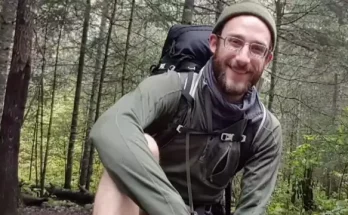
The incident happened on Sunday near a temple in Karnataka, where 42-year-old R. Basavaraju reportedly trespassed into a restricted forest zone. Witnesses say the wild elephant had been peacefully eating carrots by the roadside when Basavaraju approached, holding his phone out in an apparent bid to capture a close-up selfie.
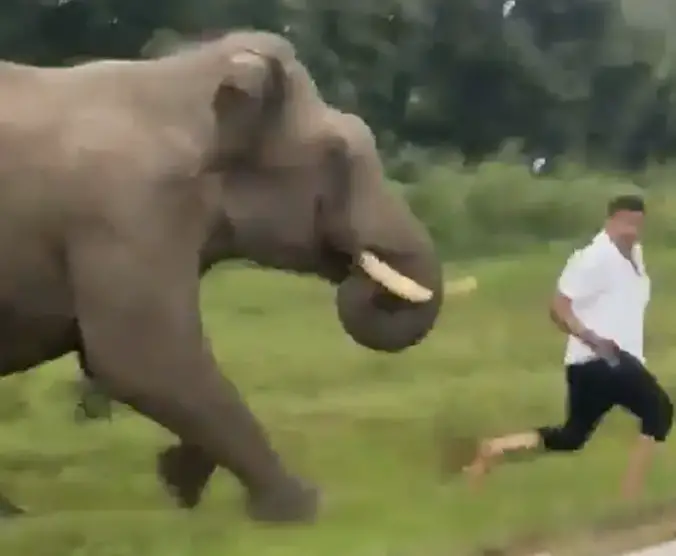
One witness, Daniel Osorio, claimed that the elephant became visibly agitated after a sudden camera flash went off. In footage that has since gone viral across social media, the animal is seen raising its trunk before breaking into a full charge across the road, scattering motorists in the process. Basavaraju, clearly panicked, tried to run but stumbled headfirst onto the tarmac.
Within seconds, the elephant caught up, stomping on the man repeatedly as onlookers screamed in horror. The force of the attack was so great that the animal ripped off Basavaraju’s trousers and underwear, leaving him half-naked in the middle of the road. The elephant then stood over him for a tense moment before retreating back into the forest, giving the injured man a chance to crawl to safety.
Miraculously, Basavaraju survived and was rushed to hospital with severe injuries, including deep bruising and suspected fractures. His ordeal did not end there — Karnataka’s Forest Department fined him 25,000 rupees (about $285) for trespassing and provoking wildlife. As part of his penalty, he was also required to record a public apology, admitting his ignorance of safety rules and urging others not to repeat his mistake.
Officials were quick to condemn the stunt, warning that such behaviour not only endangers tourists but also puts wild animals at risk of harm or culling. “This is a strong reminder to follow the rules of the wildlife reserves,” Osorio told local reporters. “People need to leave these situations to trained authorities, not approach dangerous animals on foot.”
India is home to over 30,000 wild elephants — around 60% of the world’s Asian elephant population — and encounters between humans and the animals have become increasingly common as tourism expands. While elephants are generally gentle creatures, conservationists say fear, stress, or provocation can cause them to lash out with deadly consequences.
This latest attack has reignited debate over whether stricter laws are needed to deter dangerous tourist behaviour. Animal welfare advocates argue that provoking wildlife should be treated as a criminal offence, noting that in some countries, harassing protected species can carry prison sentences.
It is not the first such incident in India. Just last year, a Russian woman was slammed to the ground by an elephant named Gouri at Amer Fort in Jaipur. The same elephant had also severely injured a shopkeeper months earlier. Each case has fuelled concerns that the combination of poorly enforced rules and tourists chasing viral social media moments is a recipe for disaster.
For Basavaraju, the experience has become an embarrassing cautionary tale. His half-naked scramble to safety has been replayed millions of times online, sparking both outrage and ridicule. While he recovers from his injuries, the wider conversation is now turning to whether harsher penalties — including possible jail time — could help protect both people and India’s treasured wildlife from dangerous encounters like this.