Taylor Swift was offered $50 million by Netflix for a documentary about her life and career. It was one of the biggest deals in streaming history. The kind of money that would have made her even wealthier than she already was. But Taylor said no, not to the documentary, but to the money.
What she did with that $50 million instead didn’t just save one family from financial ruin. It saved a little girl’s life in a way nobody saw coming. It was March 2020, right before the pandemic shut down the world. Netflix had been pursuing Taylor for years, wanting to create a documentary that would rival the success of Miss Americana, but this time they wanted something different.
They wanted full access to her life during the lover era and the beginning of what would become folklore. They were offering unprecedented money, creative control, and a guaranteed global release. Taylor’s team was thrilled. Her lawyers were drafting contracts. Her management was negotiating terms. Everyone assumed Taylor would sign.
Why wouldn’t she? It was $50 million for telling her own story on her own terms. But Taylor had been reading her fan mail, something she still did personally despite having thousands of letters coming in every week. One letter stopped her cold. It was from a woman named Rebecca Thompson, and it was different from the others.
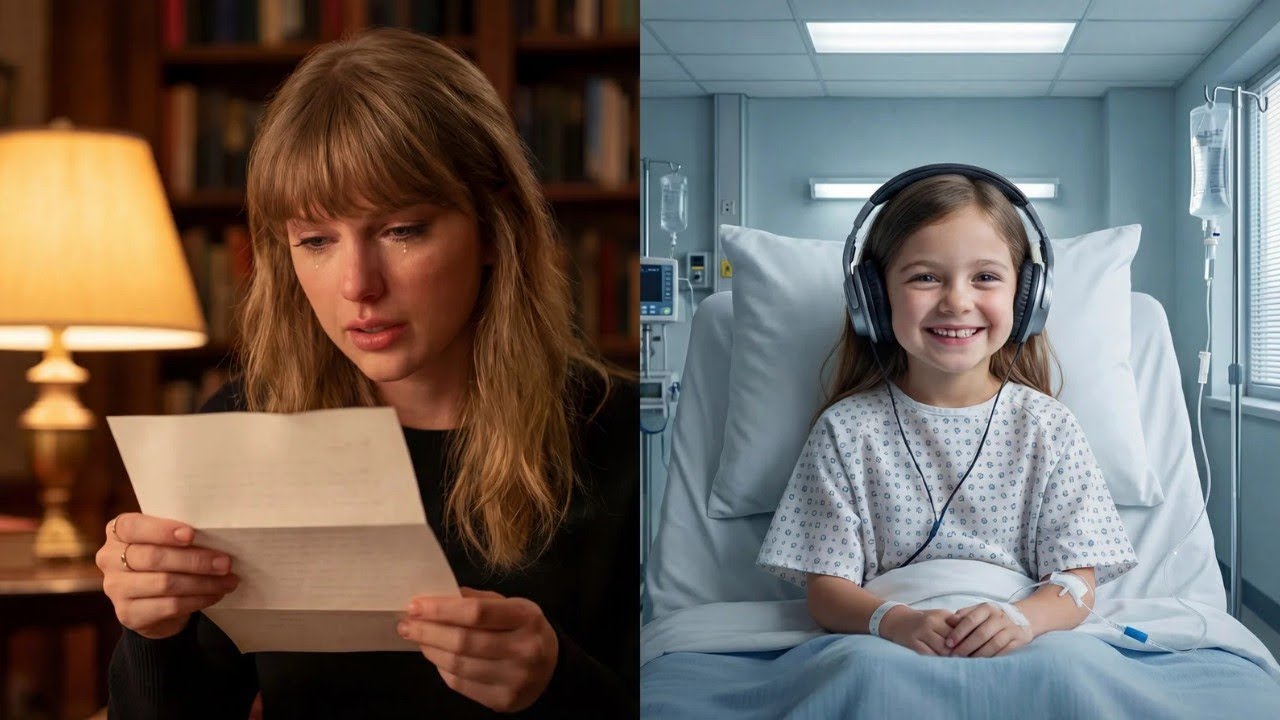
It wasn’t asking for an autograph or sharing a story about how Taylor’s music had helped through a breakup. It was a mother’s desperate plea written in the middle of the night. Dear Taylor, the letter began. My daughter Mia is 8 years old and she’s dying. She has acute lymphablastic leukemia and we’ve tried everything.
The cancer isn’t responding to treatment anymore. We’ve spent everything we have on medical bills. We’re about to lose our house, but Mia still listens to your music every single day. She says your songs make her feel less scared. I don’t know why I’m writing this. I guess I just wanted you to know that in our darkest moments, your voice has been the only light we have.
Taylor read that letter three times. Then she did something her team didn’t expect. She called Rebecca Thompson directly, not through an assistant, not through her publicist. She found Rebecca’s phone number and called her from her personal phone. Rebecca answered on the second ring. Hello. Hi. Is this Rebecca Thompson? Yes. Who is this? This is Taylor Swift.
I got your letter about Mia. Rebecca started crying immediately. I can’t believe this is real. I’m so sorry I bothered you. I shouldn’t have sent that letter. Don’t apologize, Taylor said. Tell me about Mia. Tell me everything. Rebecca told her. Mia had been diagnosed with leukemia when she was 6 years old.
At first, the prognosis was good. The doctor said she had an 85% chance of beating it. But the cancer was aggressive and resistant to chemotherapy. They’d tried everything. radiation, experimental treatments, clinical trials. Nothing worked. The medical bills had destroyed them financially.
Rebecca’s husband, David, had taken out three loans against their house. They’d maxed out every credit card. They’d sold their cars, their furniture, everything they could sell. They were $380,000 in debt with no way to pay it back. And now the doctors were saying there was only one option left, a bone marrow transplant from a matched donor.
But even if they found a match, the procedure would cost another $500,000. Money they didn’t have. We can’t afford it, Rebecca said, her voice breaking. We’re going to lose our house in 2 months. We’re about to declare bankruptcy. And my baby girl is dying and I can’t save her. Taylor was quiet for a moment.
What’s Mia’s favorite song? Shake it off. She plays it every morning when she wakes up. She says it reminds her to be brave. Can I talk to her? She’s sleeping right now. The medication makes her so tired. That’s okay. Can you have her call me when she wakes up? I want to talk to her. Taylor gave Rebecca her personal number. 3 hours later, her phone rang.
Is this Taylor Swift? A small, weak voice asked. Hi, Mia. Yeah, it’s me. Your mom told me you like my music. I love your music. It makes me feel happy even when I’m sick. They talked for 30 minutes. Mia told Taylor about her favorite songs, about her stuffed animals, about how much she missed going to school.
Taylor told Mia about her cats, about writing songs, about being scared sometimes, too. “Are you really scared?” Mia asked. “You’re Taylor Swift. You’re not scared of anything. Everyone gets scared, Mia. Even me. But you know what I do when I’m scared? What? I remember that being brave doesn’t mean you’re not afraid. It means you keep going even when you are afraid.
And Mia, you’re the bravest person I’ve ever talked to. Mia started crying. I don’t feel brave. I feel tired. I know, but you wake up every morning and you fight. That’s brave. After they hung up, Taylor sat alone in her apartment for a long time. She thought about the Netflix deal sitting on her desk. She thought about $50 million.
She thought about what money actually meant and what it was actually for. Then she called her lawyer. I want to restructure the Netflix deal. What do you mean restructure? I want my entire fee to go to the Thompson family. All of it. Every penny. Taylor, that’s $50 million. I know how much it is. I want it to go to them.
Medical bills, house payments, Mia’s treatment, everything they need. That’s not how these deals work. Netflix pays you. What you do with the money after is up to you. Then make it work differently. I want the money to go directly to them. I don’t want it to touch my accounts. I want it structured so they get it, not me.
Her lawyer was quiet. Taylor, you could just give them the money after you receive it. No, because then it’s charity. Then it’s Taylor Swift being generous. I don’t want that. I want this to be about Mia, not about me. I want the documentary to tell her story, not just mine. Netflix isn’t going to agree to this.
Then we’ll find out. Taylor’s team set up a meeting with Netflix executives. The streaming service was confused. They’d offered one of the biggest deals in their history, and Taylor Swift wanted to give it away. We don’t understand, the Netflix executive said. “Why would you turn down $50 million? I’m not turning it down,” Taylor explained. “I’m redirecting it.
I want to make the documentary, but I want it to be about more than just me. I wanted to feature Mia Thompson’s story and I want my entire fee to go toward her medical treatment and her family’s financial recovery. That’s not how we structure these deals. Then let’s create a new structure.
The executive looked uncomfortable. Taylor, we appreciate the sentiment, but this creates legal complications, tax implications, precedent issues. I understand, but here’s the thing. You want a documentary about my life, about what matters to me, about who I really am. This is who I really am. This is what matters to me. If you can’t structure the deal this way, then we don’t have a deal.
Netflix executives looked at each other. They’d never encountered anything like this. A celebrity turning down tens of millions of dollars, not out of ego or artistic differences, but to redirect the money to a dying child. Give us 48 hours, they said. It took two weeks of intense legal negotiation, but they figured it out.
Netflix would pay Taylor’s $50 million fee directly into a trust established for the Thompson family. The documentary would feature Mia’s story alongside Taylor’s, and Taylor would receive creative control, but no direct payment. When Rebecca Thompson got the call from Netflix’s lawyers explaining the trust fund, she collapsed.
David had to catch her before she hit the floor. “This isn’t real,” Rebecca kept saying. “This can’t be real, but it was real. $50 million placed in a trust for Mia’s medical care, the family’s debt relief, and long-term financial security. Enough to pay for the bone marrow transplant. Enough to save their house. enough to ensure Mia would have everything she needed for the rest of her life.
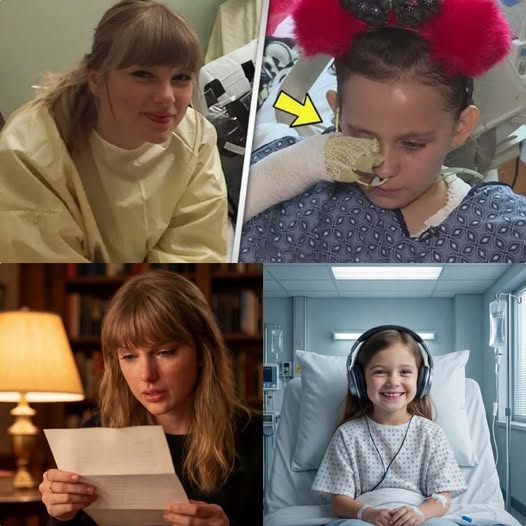
Taylor visited Mia in the hospital the next week. She brought her guitar and sat by Mia’s bed playing songs quietly while Mia rested. The documentary crew filmed some of it, but mostly they just let the moment exist. “Why did you do this?” Rebecca asked Taylor when Mia was sleeping. “You don’t even know us.” “Because I read your letter,” Taylor said. And I realized something.
I have more money than I could spend in 10 lifetimes. But Mia has one life and she’s running out of time. What’s money actually for, if not for moments like this? The documentary crew was there when the doctors found a bone marrow match for Mia. They were there when Mia went into surgery. They were there during the agonizing weeks of waiting to see if the transplant would take.
And they were there 8 months later when Mia’s cancer went into remission. The documentary titled Long Story Short: Taylor and Mia was released in January 2021. It wasn’t just about Taylor Swift’s music career. It was about a little girl fighting for her life, a family fighting to stay together, and an artist who understood that some things matter more than money.
The opening scene showed Taylor reading Rebecca’s letter out loud. The documentary followed both stories in parallel. Taylor creating folklore during lockdown, writing songs about isolation and fear and hope, and Mia fighting cancer, going through the transplant, slowly recovering. Critics called it the most honest celebrity documentary ever made.
Taylor Swift didn’t just share her story. One review said, she shared her heart, and in doing so, she saved a life. But the impact went far beyond one little girl. The documentary sparked a movement. Within weeks, other celebrities started announcing similar initiatives. Beyonce donated her documentary fee to co relief. The Rock gave his to first responders.
One by one, major artists started using their documentary deals not for personal wealth, but for public good. Netflix found themselves in a strange position. They’d been worried about setting a precedent. Now that precedent was becoming their brand identity. Netflix gives back became a program where documentary subjects could redirect their fees to charitable causes.
For the Thompson family, life transformed completely. Mia’s medical bills were paid. Their house was saved. They were debt-free for the first time in 3 years. But more than the money, they had hope. Mia was getting stronger everyday. She still listens to Taylor’s music every morning. Rebecca said in an interview a year after the documentaries release, but now she doesn’t just shake it off.
She dances real dancing because she has the energy again because she’s alive. Mia, now 9 years old and cancer-free, appeared on Good Morning America with Taylor. What’s it like knowing Taylor Swift gave you $50 million? The interviewer asked. She didn’t give me money. Mia said seriously. She gave me my life back.
That’s way more than money. Taylor hugged her. You gave me something, too. Mia, you reminded me why I do this. It’s not about the stadiums or the awards or the money. It’s about connection. It’s about using whatever platform you have to help people. You taught me that. The documentary went on to win an Emmy.
Taylor didn’t attend the ceremony. She was at Mia’s 10th birthday party playing guitar while a room full of kids sang along to shake it off. But there’s a part of this story that most people don’t know. The documentary success created an unexpected medical miracle. Thousands of people who watched the film were inspired to register as bone marrow donors.
Within 6 months of the documentaries release, the National Marrow Donor Program reported a 300% increase in new registrations. 47 people found bone marrow matches because of the documentary. 47 other Mia got their chance at survival because Taylor Swift told one little girl’s story. Rebecca Thompson started a foundation called Mia’s Match to encourage bone marrow donation and help families facing pediatric cancer costs.
To date, the foundation has helped 200 families and facilitated over 100 bone marrow matches. Taylor didn’t just save Mia. Rebecca says she created a ripple effect that’s saving children across the country. and she did it by refusing money she’d earned, by choosing impact over income, by remembering that we’re here to help each other.
Taylor has never publicly discussed the financial details of the Netflix deal. When interviewers ask about giving away $50 million, she redirects, “It was never my money,” she says. “It was Mia’s. From the moment I read that letter, I just made sure it got to the right place. Today, Mia is 12 years old, cancer-free for 3 years, and thriving.
She’s learning to play guitar. She writes songs. She wants to be a musician someday, not because she wants to be famous, but because she wants to make people feel less alone, like Taylor did for me, Mia says. The documentary still streams on Netflix. New viewers discover it every day. And every time someone watches, they see what happens when an artist remembers that art isn’t about money. It’s about meaning.
It’s about using your voice, your platform, your resources to make someone else’s life better. Taylor Swift could have taken $50 million and no one would have questioned it. She’d earned it. She deserved it. But she understood something more important. She understood that the best use of money isn’t accumulation, it’s transformation.
And in choosing to transform the Thompson family’s tragedy into hope, Taylor transformed herself, too. She became more than a musician or a celebrity. She became proof that compassion can be radical, that generosity can be revolutionary, and that sometimes the most powerful thing you can do with money is let it go.
Mia still has Taylor’s personal phone number. They text occasionally. Last week, Mia sent her a video of herself playing guitar and singing, “Long story short.” Taylor responded immediately, “You sound beautiful. Keep going. The world needs your voice.” Because that’s what this story is really about. Not about $50 million or Netflix deals or even cancer survival.
It’s about one human being seeing another human being’s need and responding with everything she had. It’s about choosing connection over cash. It’s about understanding that we’re not here to get rich. We’re here to help each other live. If this story moved you, hit that subscribe button and give this video a thumbs up. Share it with someone who needs to be reminded that compassion can change everything.
Have you ever helped someone when no one was watching? Have you ever received help when you needed it most? Share your story in the comments below. And don’t forget to ring that notification bell for more incredible true stories about the humanity behind music’s greatest artists.